Air Duct Cleaning After Fire and Smoke in East Texas
After a fire or smoke event, the HVAC system becomes a distribution network for contamination. Cantt Restoration assesses, cleans, and documents your ductwork to prevent soot, odor, and particulates from circulating through a structure that has already been remediated. Call 24/7: (903) 251-9525.
Request AssessmentWhy Air Ducts Matter After a Fire, Smoke, or Mold Event
When a fire burns in a structure, smoke and soot do not stay where the fire was. They travel through every opening, including the HVAC return air pathways, ductwork joints, and supply registers. If the system runs during or after the event, contaminated air is pulled through and distributed throughout every room the system serves.
Even after surface cleaning is complete, contaminated ducts can redeposit soot on cleaned walls, ceilings, and contents. They carry odor compounds that surface treatments cannot reach. They can also introduce fine particulates into rooms that were not directly affected by the fire.
The same issue applies after mold remediation. If mold spores were present near HVAC returns or supply pathways, the ductwork should be inspected before the system is operated post-remediation.
Industry best practice: shut the HVAC system off after a fire or smoke event and leave it off until it has been assessed. Running the system before cleaning redistributes contamination. If you are unsure what to do, call us first and we will walk you through it.
The air your family breathes passes through those ducts every day.
Cantt Restoration — East Texas
How Does Air Duct Cleaning After Fire Work?
Air duct cleaning in a post-fire or post-smoke environment is different from routine HVAC maintenance. The contamination is different, the documentation requirements are different, and the equipment requirements are different.
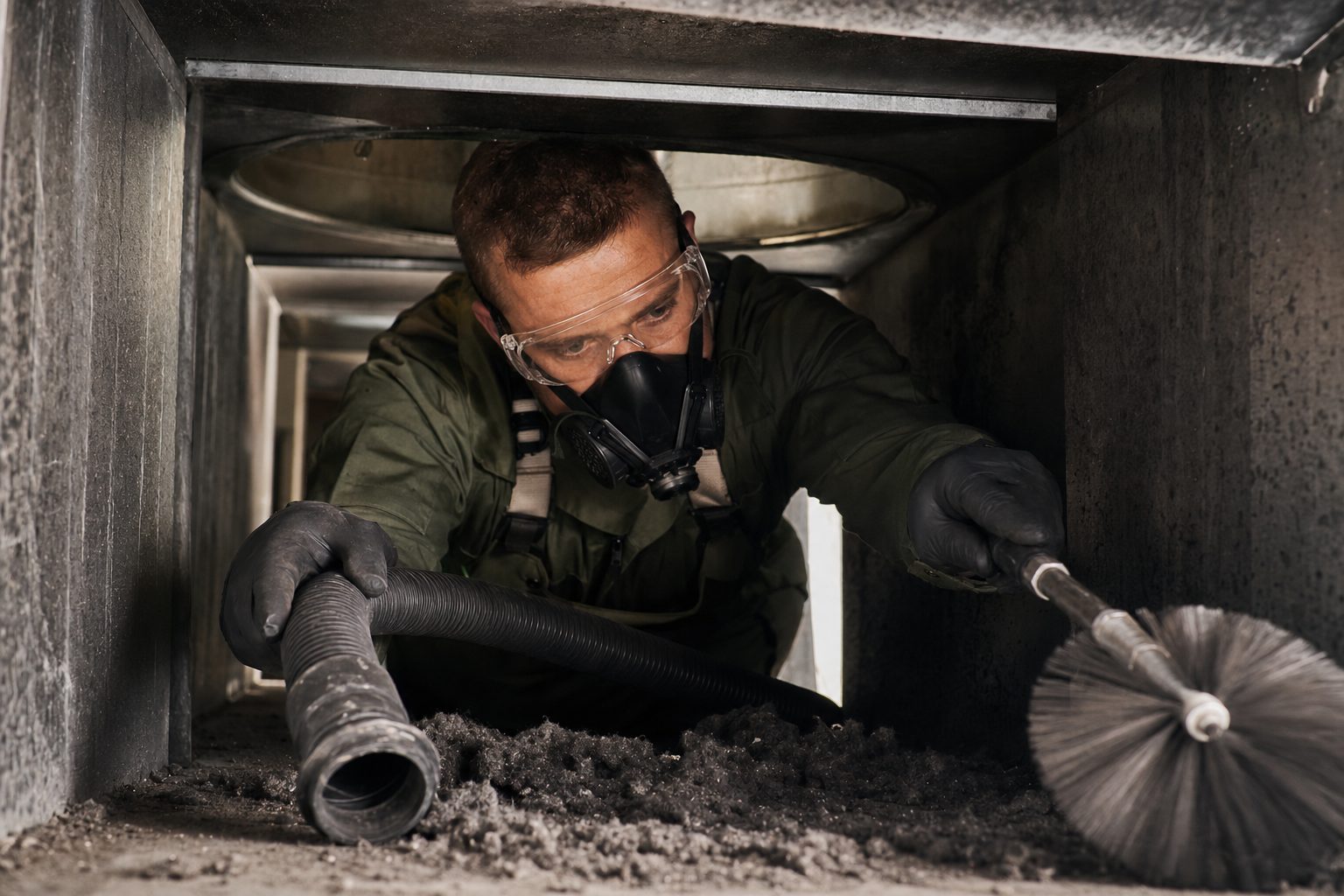
Assessment and Scope Definition
Before any cleaning begins, we assess the ductwork system to determine the extent of contamination. This includes inspecting accessible registers, return air pathways, and the air handling unit. We document conditions with photographs before work begins. Assessment comes before scope, and scope comes before any cleaning activity.
HEPA Vacuum Extraction
Cantt Restoration uses HEPA-rated vacuums for all duct cleaning work in contaminated environments. The Ruwac HEPA vacuum captures particles down to 0.3 microns, which means soot, mold spores, and fine combustion particulates are captured rather than discharged back into the environment. Standard shop vacuums are not rated for this application and should not be used in contaminated duct systems.
Register and Grille Cleaning
Supply and return registers are removed, cleaned, and inspected. Registers are frequently the first accumulation point for soot and debris and should be addressed before the system is returned to operation.
Air Handler Unit Inspection
The air handling unit itself, including the coil, blower, and drain pan, can accumulate contamination from a smoke event. We inspect these components and document their condition. If the air handler requires service beyond cleaning scope, we document that finding for coordination with an HVAC service provider.
Documentation and Clearance
Post-cleaning conditions are documented with photographs. For jobs that required mold-related duct cleaning, we coordinate with the overall mold remediation clearance process. The file records pre-cleaning conditions, work performed, and post-cleaning conditions.
When Is HVAC Cleaning Required After Water Damage?
Water intrusion does not always reach ductwork directly, but it can affect the environment around it. Elevated humidity from a water loss event can promote microbial growth on duct surfaces, particularly in systems with flexible ductwork or in unconditioned spaces like attics and crawlspaces. If a water event was significant enough to warrant structural drying, the HVAC system should be part of the overall assessment.
We assess ductwork as part of water damage mitigation when the scope indicates it is appropriate. We document what we find and what we do not find.
Air Duct Cleaning in East Texas: What to Expect
East Texas homes vary considerably in HVAC system age and design. Older homes in Smith, Cherokee, and Wood counties frequently have rigid sheet metal ductwork in attic spaces. Newer construction often uses flexible duct that is more susceptible to smoke penetration and harder to clean thoroughly. Manufactured homes have different duct configurations entirely.
We assess the specific system in the specific home and document the scope based on what is actually there. We do not apply a standard scope to every job because every job is different.
Frequently Asked Questions About Air Duct Cleaning After Fire
Why do air ducts need to be cleaned after a fire?
Smoke and soot particles migrate into ductwork during a fire event. When the HVAC system runs, those particles circulate through every room in the structure. Contaminated ducts also harbor odor compounds that surface cleaning cannot reach and can recontaminate areas that have already been cleaned.
Is HVAC cleaning needed after mold remediation?
If mold growth was present in areas connected to the HVAC return or supply air pathways, the ductwork should be inspected and assessed. Mold spores can settle on duct surfaces and be redistributed by system operation. Assessment comes before cleaning to confirm scope.
What equipment is used for air duct cleaning after fire?
Cantt Restoration uses HEPA-rated vacuums, including the Ruwac HEPA vacuum, which captures particles down to 0.3 microns. This prevents soot, mold spores, and other fine particles from being discharged into the cleaned environment during the process.
Should the HVAC system run after a fire while waiting for cleanup?
Industry best practice is to shut the HVAC system off after a fire or smoke event until the ductwork can be assessed. Running the system before cleaning redistributes contamination throughout the structure. If you are unsure, call us first and we will walk you through it.
Related Services
- Fire and Smoke Remediation — duct cleaning is part of the overall fire remediation scope
- Odor Removal — HVAC-distributed odor requires both duct cleaning and structural treatment
- Mold Remediation — duct systems connected to mold-affected spaces require assessment
- Water Damage Mitigation — humidity from water losses can affect ductwork
This content is for general informational purposes only and does not constitute legal, insurance, or professional restoration advice. Cantt Restoration is not a policy expert, attorney, or public adjuster. Every loss situation is unique. For questions about your coverage, contact your insurance company, adjuster, or agent directly. For assessment of your specific situation, consult a qualified restoration professional. Cantt Restoration follows ANSI/IICRC S500, S520, and S740 standards on every job.
Send Us a Photo — No Obligation
Not sure how bad it is? Send us a photo and we will give you an honest assessment. No sales call. No pressure.
Photos of the affected area only. No need to include people, faces, or children. Avoid photos showing personal documents or ID cards. One or two clear photos is plenty. Photos submitted through this form are used solely to assess your situation and are not shared, sold, or published without your written consent.
Do Not Run the System Until It Has Been Assessed
Call 24/7. We assess, clean, and document your HVAC system as part of your restoration project in East Texas.
(903) 251-9525 — 24/7 Emergency Line