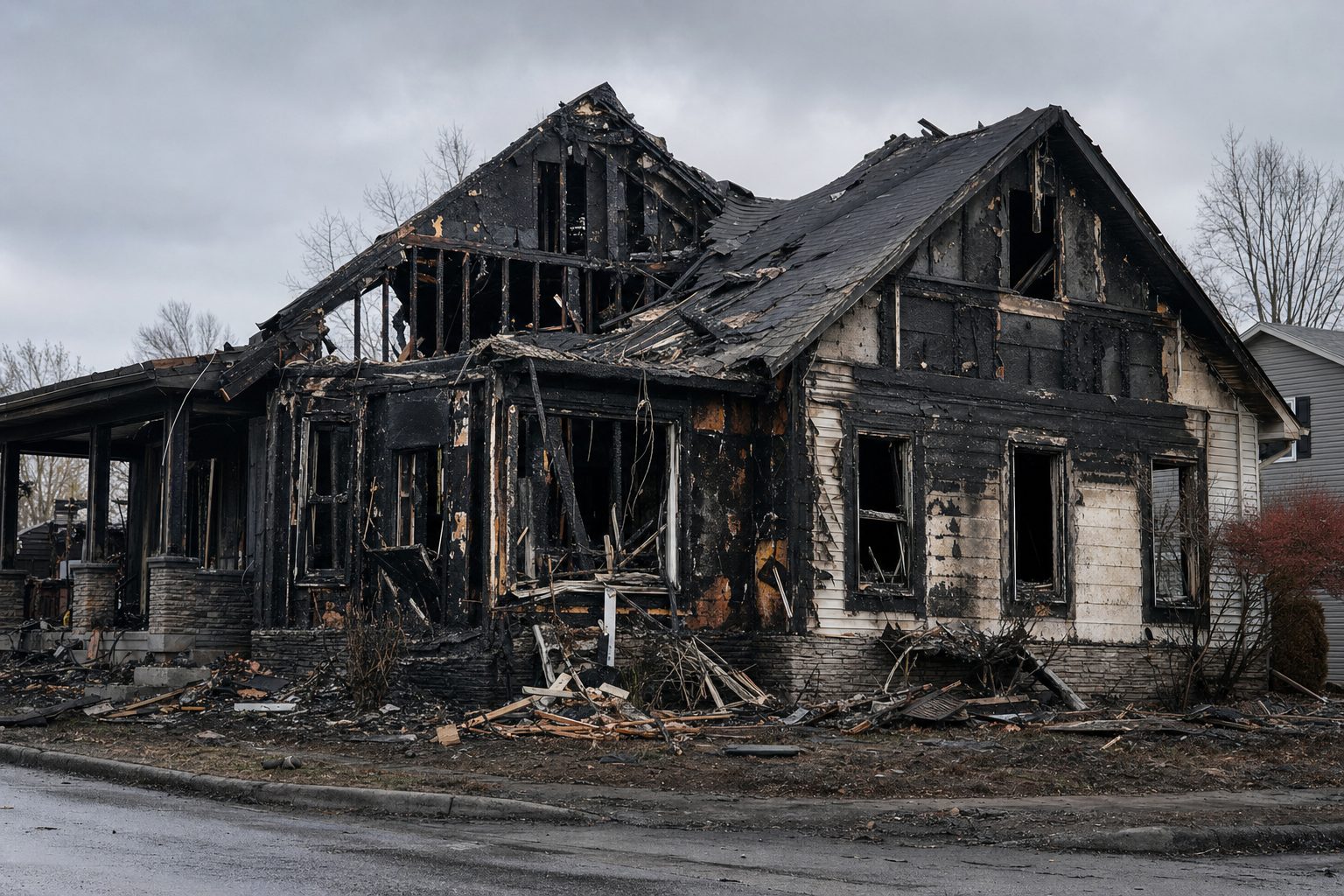
Fire Damage
Mitigation.
Smoke penetrates everywhere: wall cavities, ductwork, contents, and areas far beyond the burn. Cantt Restoration responds immediately, follows ANSI/IICRC S740 standards, and handles mitigation and contents simultaneously across East Texas.
What We Do
Fire Damage Mitigation and Smoke Remediation in East Texas
Fire damage mitigation is not just about what burned. Smoke penetrates everywhere: wall cavities, ductwork, attic spaces, and soft furnishings throughout the structure, far beyond the visible damage area. Cantt Restoration responds immediately, follows ANSI/IICRC S740 standards on every job, and handles mitigation, smoke remediation, and contents restoration simultaneously. Mitigation first, documentation throughout, contents recoverable.
Emergency Board-Up and Stabilization
We secure fire-damaged structures immediately: board-up of windows, doors, and breached walls; roof tarping; and temporary security to prevent weather intrusion and unauthorized entry while mitigation begins.
Smoke and Soot Removal
Soot removal requires matching the correct cleaning method to each surface type: dry sponge methods for wet soot, chemical sponge methods for dry soot, and specialty cleaning for electronic components. Using the wrong method sets the damage permanently.
HEPA Air Filtration
We deploy HEPA air scrubbers and HEPA vacuums to capture smoke particles and reduce airborne contamination throughout the structure during the mitigation process.
Thermal Imaging for Hidden Damage
We use FLIR thermal imaging to identify hot spots, smoldering materials, and the full extent of heat and smoke migration through wall cavities and structural assemblies that visual inspection misses.
Odor Neutralization
We deploy ozone treatment, thermal fogging, and hydroxyl generation to neutralize smoke odors at the molecular level. Surface cleaning alone does not eliminate smoke odor. See our odor removal page for the full process.
Contents Pack-Out and Restoration
Everything salvageable is inventoried and packed out before on-site work begins. Contents are professionally cleaned, deodorized, and restored at our facility. See our contents restoration page for the full process.
Air Duct and HVAC Cleaning
Smoke travels through ductwork and contaminates the HVAC system. Fire damage mitigation is not complete without duct cleaning. See our air duct cleaning page for post-fire duct remediation.
Matterport Documentation
We use Matterport 3D scanning at initial conditions to create a dimensionally accurate record of the full scope of damage. We document what is actually there. Not more. Not less.
We do just what is needed. Not what will get paid fast and easy.
Cantt Restoration — East Texas
Understanding Fire Damage
Does Smoke Damage Spread Beyond the Fire Area?
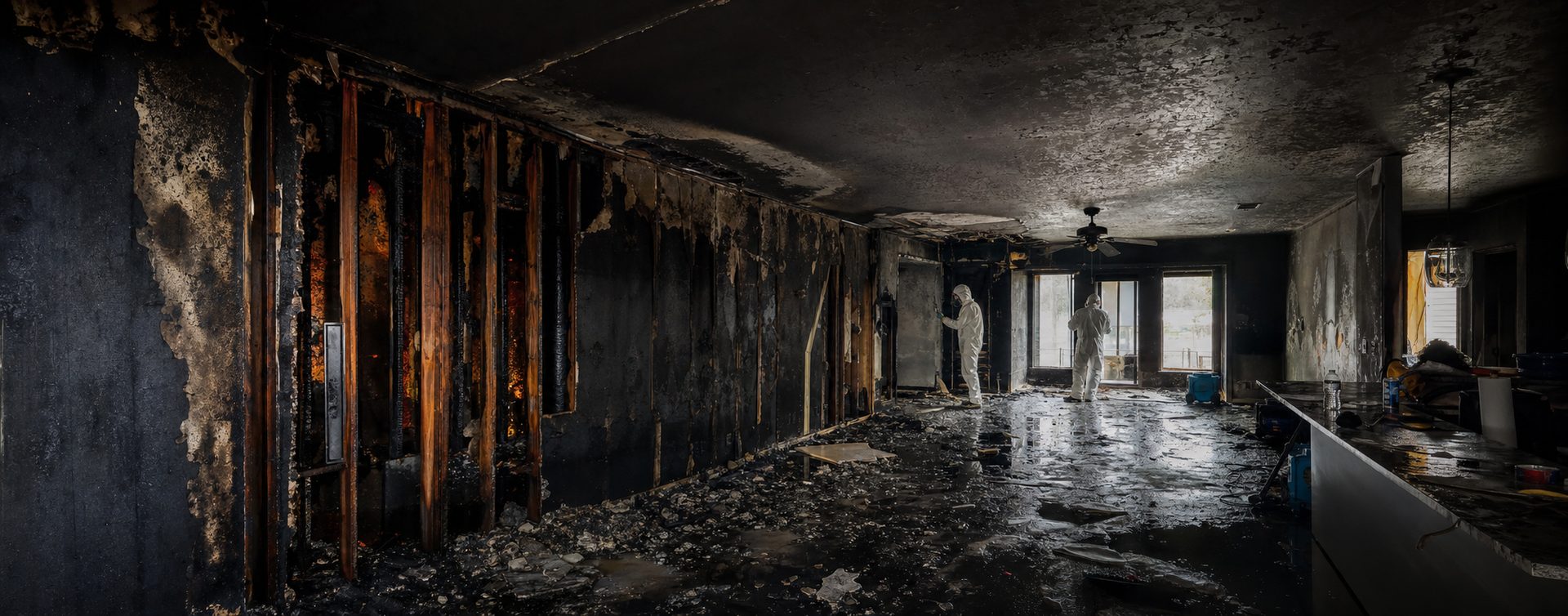
Yes, significantly. Smoke is carried by air pressure differentials and thermal convection into areas of the structure that were never directly affected by flames or heat. In a Gilmer-area home fire we responded to, the kitchen fire was contained to one room, but smoke had traveled through the HVAC return into four other rooms, depositing soot on surfaces, furniture, and inside the ductwork throughout the house. ANSI/IICRC S740 requires assessment of smoke migration across the full structure.
Longview commercial structures present a similar challenge at larger scale. A warehouse fire generates smoke volumes that saturate insulation and ceiling assemblies far from the origin point. Assessment must account for the full structure, not just the visible burn area.
After the Fire
What To Do After a House Fire
If you do not feel safe, do not go back in. Call us first at (903) 251-9525 and we will walk you through it.
Do: Wait for Fire Department Clearance
Do not re-enter until the fire department has officially cleared the structure. Fire damage weakens floors, ceilings, and walls in ways that are not always visible from the outside.
Do: Call Us Immediately
Call Cantt Restoration at (903) 251-9525. We dispatch immediately to board up and tarp the property, protecting it from weather and securing it while you arrange temporary housing.
Do: Video Before You Touch Anything
Walk every room with your phone camera running before anything is touched or moved. This continuous timestamped record is important for your insurance file.
Do Not: Clean Soot Yourself
Do not wipe soot from any surface. Improper cleaning smears acidic residue deeper and permanently sets stains. Each surface requires a specific method. Call us first.
Do Not: Run Your HVAC or Ceiling Fans
Smoke particles recirculate through ductwork and cross-contaminate areas that were not directly affected. Do not run the system until it has been assessed and cleaned.
Do Not: Discard Fire-Damaged Items
Contents that appear destroyed are frequently restorable. Disposing of them before professional evaluation permanently eliminates your ability to recover their value. Let our contents team assess everything first.
Send Us a Photo — No Obligation
Not sure how bad it is? Send us a photo and we will give you an honest assessment. No sales call. No pressure.
Photos of the affected area only. No need to include people, faces, or children. Avoid photos showing personal documents or ID cards. One or two clear photos is plenty. Photos submitted through this form are used solely to assess your situation and are not shared, sold, or published without your written consent.
Questions
Fire Damage Mitigation: Frequently Asked Questions
What should I do immediately after a house fire in East Texas?
After the fire department clears the property: call Cantt Restoration at (903) 251-9525. Do not attempt to clean soot yourself. Do not run your HVAC system. Document with video before touching anything. We handle emergency board-up, stabilization, and begin the mitigation process immediately.
Why should I not clean soot myself?
Soot contains acidic compounds that continue to etch porous surfaces after the fire. Wiping improperly smears residue deeper and permanently sets stains that professionals could have removed. Each surface type requires specific cleaning methods. Call a professional before touching anything.
How far does smoke penetrate after a fire?
Smoke penetrates everywhere. It travels through wall cavities, ductwork, attic spaces, and soft furnishings far beyond the fire area. ANSI/IICRC S740 requires testing for smoke migration across the full structure, not just the visible damage area.
Can fire-damaged contents be saved?
Many can. Furniture, clothing, documents, electronics, and personal items that appear destroyed are often recoverable through ultrasonic cleaning, ozone treatment, and specialty restoration processes. Do not discard anything before professional evaluation.
This content is for general informational purposes only and does not constitute legal, insurance, or professional restoration advice. Cantt Restoration is not a policy expert, attorney, or public adjuster. Every loss situation is unique. For questions about your coverage, contact your insurance company, adjuster, or agent directly. For assessment of your specific situation, consult a qualified restoration professional. Cantt Restoration follows ANSI/IICRC S500, S520, and S740 standards on every job.
Do Not Wait on Fire Damage.
Available 24 hours a day, 7 days a week. On-site within the hour across East Texas.
(903) 251-9525